

The Military Veteran’s Shortcut: Online Aviation Training for FAA A&P License Course Credits
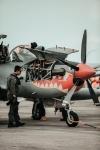
Transitioning from military service to a civilian career can feel overwhelming. For veterans with aviation backgrounds, the Federal Aviation Administration (FAA) offers a unique shortcut: your service experience may count toward credit for an A&P license course. This pathway can save you time, money, and energy while giving you a competitive edge in the aviation job market.
Today, self-paced aviation training programs allow veterans to leverage their experience while filling any knowledge gaps with structured, civilian-recognized education. By combining aviation career training with FAA guidelines, service members can move quickly from military to civilian aircraft maintenance roles.
How Military Service Counts Toward FAA A&P Certification
The FAA recognizes that veterans bring significant skills from their service. According to FAA.gov, aviation mechanics who performed tasks in the military, such as inspections, system checks, and troubleshooting, may be eligible for credit toward the Airframe & Powerplant (A&P) license.
This means you may not need to start from zero. Instead of sitting through a full traditional program, you can focus on filling the knowledge gaps with an AMT certification course online. By aligning your hands-on background with FAA requirements, you can position yourself to test for certification sooner.
For example, a veteran who worked on aircraft hydraulics, power plants, or avionics during service could get partial credit toward an aircraft general familiarization course. Paired with flexible civilian training, this accelerates the path toward becoming an FAA-certified aircraft mechanic.
Why an Online Path Is Veteran-Friendly
Veterans transitioning into civilian life often juggle family, work, and further education. A traditional in-person program can be rigid and difficult to manage. That's where online courses excel.
Options like an A&P mechanic training allow veterans to study at their own pace. These courses mirror the depth of classroom instruction but offer the flexibility of learning from home. By choosing an online aviation certificate, veterans can balance education with personal responsibilities without compromising on quality.
Even better, many programs include aircraft-specific modules, such as a B737 or an A320 general familiarization course, which give you specialized insight into the most common commercial aircraft in service today. This makes the leap into civilian employment even smoother.
The Role of Gen Fam Courses
A Gen Fam, or general familiarization course, is an aircraft-specific training program designed to provide detailed system-level knowledge. Veterans may already know how to service components, but Gen Fam training helps translate that experience into civilian-recognized expertise.
For instance, if you worked primarily on military transport aircraft, you can supplement that with a Boeing 737 or an Airbus A320 general familiarization course. These programs prepare you to step into commercial aviation roles, where familiarity with popular aircraft families is a major hiring factor.
Many veterans choose courses like:
- B777 general familiarization courseto prepare for widebody cargo operations.
- A330 general familiarization coursefor airlines expanding long-haul fleets.
- B747 general familiarization coursefor iconic jumbo jet operations is still active worldwide.
By stacking these aircraft-specific courses alongside an A&P license course, you become a versatile and attractive candidate for employers.
From Military Mechanic to Civilian Technician
According to the Bureau of Labor Statistics, demand for aircraft mechanics is projected to grow steadily over the next decade. With airlines and cargo operators expanding fleets, companies are eager to hire veterans who combine hands-on experience with FAA credentials.
That's why aviation professional courses are so valuable: they bridge the military-civilian gap. With an airplane systems training module, veterans gain the civilian terminology, documentation knowledge, and type-specific training employers expect.
Consider this example: A former Air Force crew chief already has years of hydraulic and power plant experience. By completing an aviation training course and sitting for the A&P exam, they can transition seamlessly into roles at airlines, maintenance, repair organizations (MROs), or cargo carriers.
Why Specialized Aircraft Courses Add Value
Commercial aviation employers look for technicians who can hit the ground running. Veterans with aircraft-specific training stand out.
Courses such as:
- B757 general familiarization course
- A330 general familiarization course
- B767 general familiarization course
…give veterans targeted expertise that matches the fleets operated by global carriers. This means during interviews, you can “talk the talk” of the airline industry, discussing ATA chapters, system interfaces, and maintenance best practices with confidence.
Pairing these with an aircraft systems course or even an aircraft type certification course ensures you're not just FAA-compliant but also operationally ready.
Taking the Next Step
Veterans have a clear advantage: the FAA values your service, and the aviation industry values your skills. The right mix of military credit, FAA recognition, and civilian-friendly training can help you transition faster and with confidence.
By enrolling in an A&P license course and supplementing with type-specific general familiarization courses, you position yourself as an in-demand aviation professional ready to work on some of the world's most advanced aircraft.
If you're ready to turn your service experience into a civilian aviation career, it's time to explore your options. Gen Fams offers flexible, veteran-friendly programs designed to support this exact transition. Learn more about their courses, discover their approach to aviation training, or connect directly through their contact page to start your journey.
About the Author
John Matthews is a retired U.S. Air Force aviation maintenance supervisor with over 20 years of hands-on aircraft experience. Today, he writes about aviation training, certification, and industry trends, helping veterans and aspiring mechanics find the right path into civilian aviation careers.